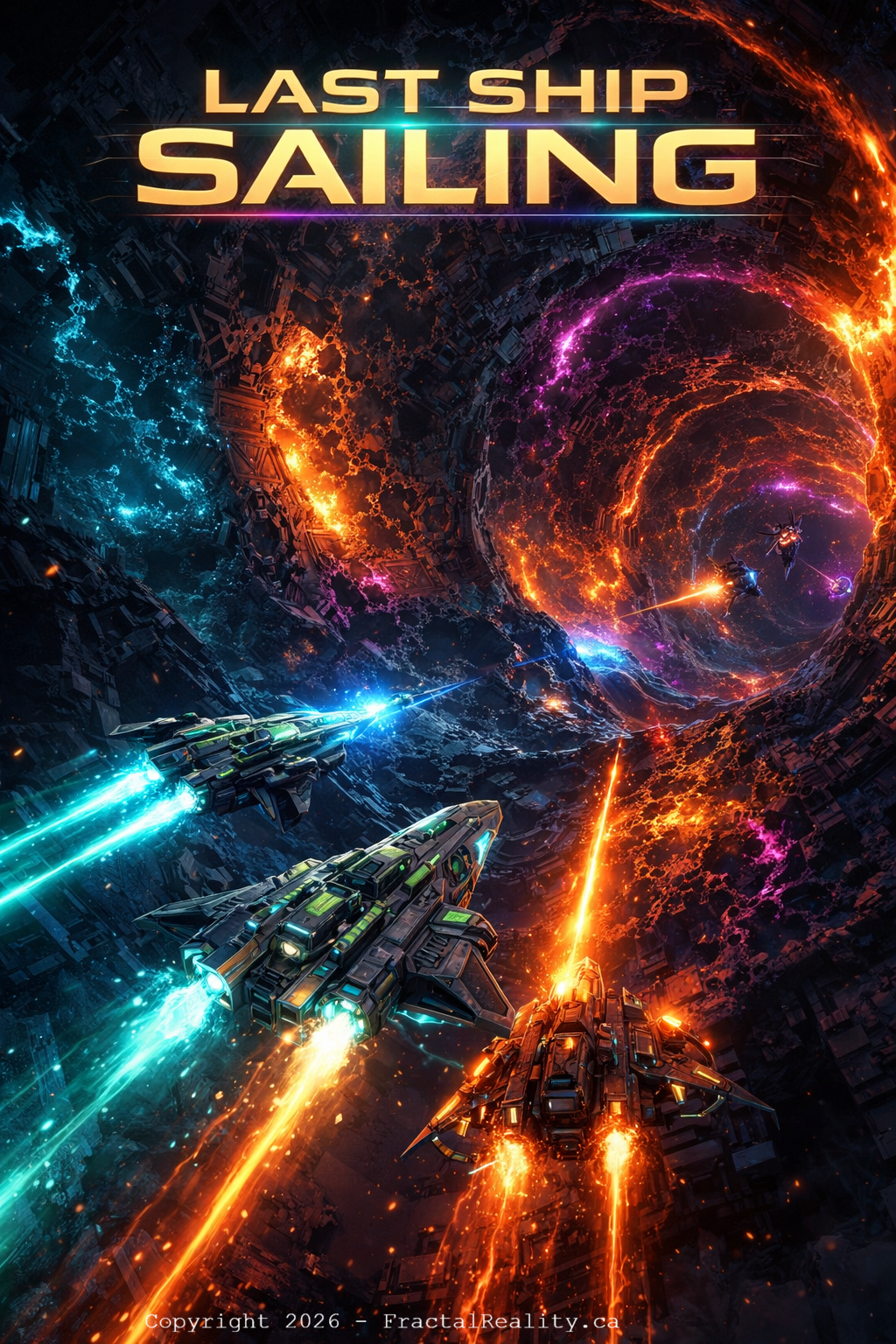
Welcome to Last Ship Sailing, pilot!
My name is Ashman Roonz, and I am the creator of this game.
This game is inspired by my need for speed, combat, and my love for piloting. In Last Ship Sailing, you will pilot a precision zero gravity killing machine. There are currently seven ships to pilot. Each ship has its strengths and weaknesses, and you can tip the balance toward either strength or weakness, to fail or be victorious. Will you be the Last Ship Sailing?
My favorite game of all time is Titanfall 2. I loved the titans so much that I modeled each ship after each titan. I loved the combat of Descent and I wanted to have the best of both worlds. I've been dreaming of this game for decades, and now I finally have the means to create it. AI has not only been my tool of choice, but its intelligence is like having a team of genius collaborators. Claude mainly, and Chat GPT, have helped me bring my idea to life. Now my only wish is to share this dream with you. I hope you enjoy and we can have some good battles together!
The Game
Last Ship Sailing is zero-gravity ship combat, PvP and PvE: fly it solo, co-op, or versus other pilots. Alien arenas, endless caverns, a neon city under siege, an open overworld, even the real Earth. Pick one of seven ships (Slayer, Tracker, Pyro, Blaster, Vortex, Syphon, Puncture), each with its own weapon, abilities, and Core Move, and choose your fight:
- Elimination ; fleet against fleet, round by round, against players, bots, or both. The last fleet sailing takes the round.
- Assault ; one fleet storms the champion field, the other holds it. Roles swap every round.
- Cyberpunk City ; attack the neon city from a carrier, or defend it with the city's own traffic fighting at your side. Sides swap every round.
- Race ; open-cavern sprints and ring-gated circuits, against bots or friends.
- Endless ; a cavern with no end, solo or co-op. Distance is your score.
- Campaign ; a solo or co-op journey through waves and bosses (under construction).
- Exhibition ; free flight in the open overworld: explore, take the six cities, and rank up your ships. In a room it's a free-for-all.
- Free Flight: Earth ; the real planet, streamed. Fly anywhere.
In the fleet modes, if both sides are still alive late in the round, a champion field appears at the heart of the map, sealed inside a massive shell. Crack the shell open, slip your ship inside the field, and the round is yours ; assuming the other fleet doesn't blow you out of it first.
And stay out of the outskirts unless you mean it. Six creatures live beyond the arena walls: the FleshMaw, the GraveTitan, the HallowWalker, the IronBloom, the StoneShroud, and the VoidGazer. They spit lightning, they hit hard, and some of them can teleport right next to you.
Ways To Play
- Solo ; jump into any mode on your own; the fleet modes fill up with bots. No sign-in, no waiting.
- Co-op ; bring friends into Endless or the Campaign, or team up in the overworld against the city garrisons and the Leviathan.
- Versus ; pilot against pilot in the fleet modes and races, with bots filling out the fleets if you want them.
- Multiplayer ; share a 4-letter room code and your browsers connect directly to each other. Friends, family, the kid down the hall: anyone who enters the code is in your match.
- Play While Waiting ; host an open match and fight bots while you wait. Other players can drop in mid-round and take over a bot's seat on the enemy team. No lobbies, no queues ; the fight just gets more real.
- Anywhere ; keyboard and mouse, touch screen, gamepad, or a VR headset. Same game, same matches.
Signing in with Discord is optional. It adds your name and avatar to matches, the live lobby, stats, and the leaderboard ; the game itself never needs an account.
Made By
Connect
- Game: lss.fractalreality.ca
- Discord: join the server
- Reddit: r/LastShipSailing
- Author site: fractalreality.ca
- Email: ashroney@gmail.com